

The Interests of Lithuanian Farmers in the Spotlight in Brussels
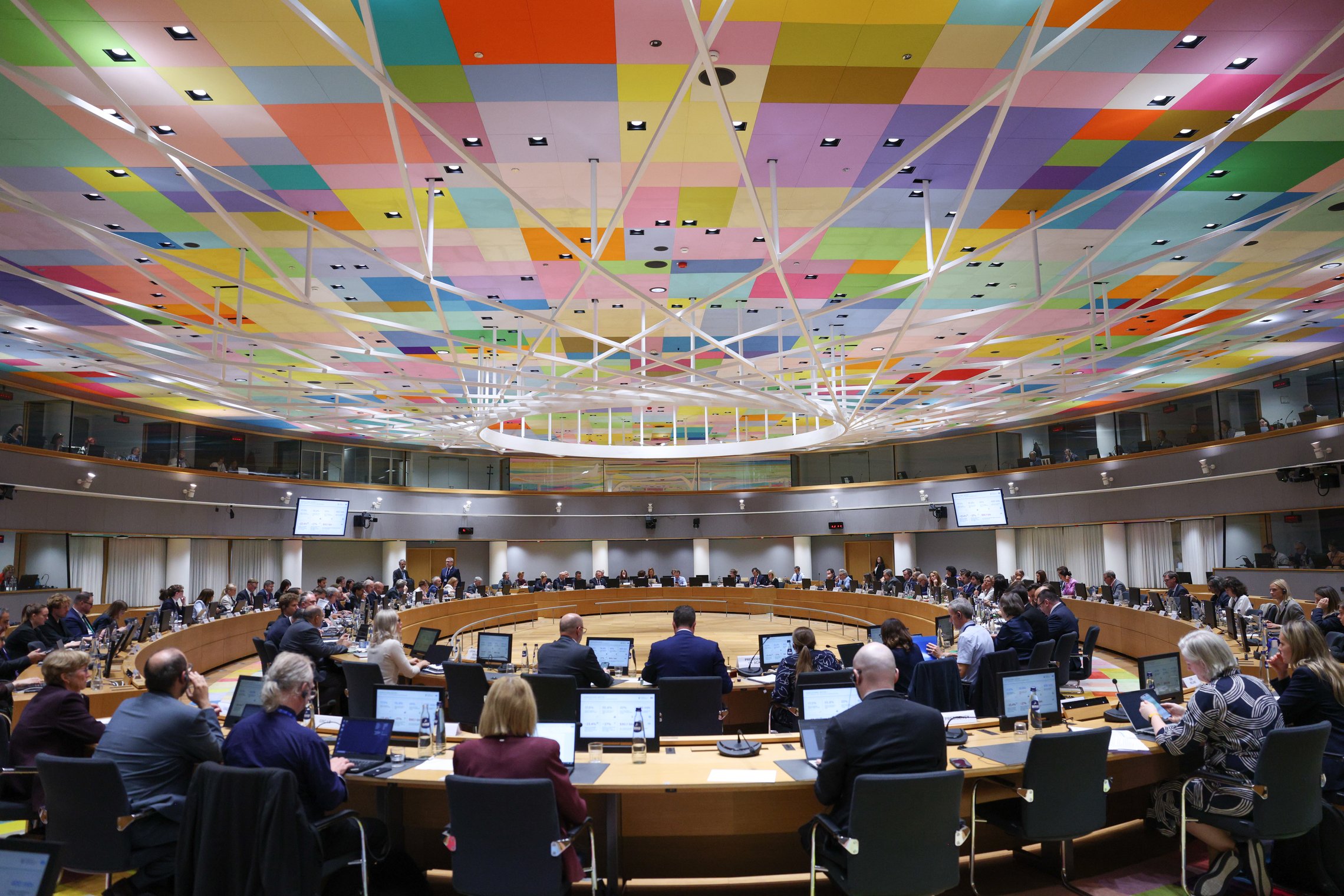
Stricter controls on the origin of grain, more stable dairy and fertiliser markets, greater flexibility in financial support for farmers, more effective risk management, the modernisation of the fishing fleet and the strengthening of competitiveness – these were the objectives emphasised by Lithuania at the European Union’s Agriculture and Fisheries Council meeting held in Brussels on 28–29 September.
The future of the Common Agricultural Policy (CAP) after 2027
In discussions on the future of the Common Agricultural Policy (CAP) after 2027, Lithuania’s Deputy Minister of Agriculture Rolandas Taraškevičius called for more flexible and simpler support measures that do not create additional administrative burdens without clear added value, and highlighted the need to complete the convergence of direct payments. Lithuania supported the Irish Presidency’s efforts to reach a partial general approach in October. The Council also touched on issues related to capping direct payments, the definition of an active farmer, and support for young and small-scale farmers.
“The definition of an active farmer should be mandatory at EU level. Income support should be directed to farmers who are genuinely engaged in agricultural activity, while the specific criteria should be determined by the Member States themselves,” the Deputy Minister said.
Greater attention to grain origin and traceability
During the meeting, Ukraine’s Minister of Agriculture Taras Vysotskyi expressed concern about the impact of the Black Sea blockade on domestic production, exports and global food security. One in five Ukrainian farms that were still sowing crops last year are unable to do so this year, while logistical restrictions have resulted in longer transport routes and increased costs. In light of the challenging situation facing Ukraine’s agricultural sector R. Taraškevičius called for measures to prevent russian grain from entering the EU market through Lithuanian ports.
“Lithuania remains firmly committed to provide comprehensive support to Ukraine. With no hesitation, this also includes trade related questions. As the Ukrainian minister already mentioned, we need to responsibly draw attention to recent warnings that russia is transporting grain originating from the occupied territories of Ukraine placing it on international markets under potentially false declarations of origin. Controls, transparency and traceability of cargo transported through EU territory is of utmost importance and should be strengthened as far as possible,” R. Taraškevičius stressed.
Lithuania’s dairy sector requires close monitoring
The Deputy Minister also drew the European Commission’s attention to the tense and fragile situation in Lithuania’s dairy sector. Agricultural inputs and production costs continue to rise due to geopolitical instability, while the price of raw milk in Lithuania remains the lowest in the EU.
“Against this background, situation in Lithuanian dairy sector remains particularly challenging. Recent increase of 2% is by far overweighted by high production costs. This demands very close monitoring. If there will be no positive progress of raw milk price development and stabilisation of productions costs, crisis in the sector will bounce back,” said the Deputy Minister.
Fertiliser sector – challenges from rising costs
During the ministers’ lunch, the availability of fertilisers for EU farmers in the medium and long term was discussed. R. Taraškevičius noted that renewed increases in energy and gas prices are negatively affecting the fertiliser market. This is forcing some producers to suspend operations, while domestic production capacity alone does not shield farmers from fluctuations in global market prices. In the ongoing negotiations on amendments to the Carbon Border Adjustment Mechanism (CBAM) regulation, Lithuania called on the Commission to ensure that it can respond swiftly to a significant deterioration in the fertiliser market, including, where necessary, by temporarily excluding fertilisers from the CBAM.
More flexible support for countries affected by extreme weather events
At the Council meeting, ministers assessed the damage to agriculture caused by ongoing droughts and other extreme climate events, focusing on strengthening farm resilience, risk management and prevention. In Lithuania alone, a storm in August 2026 caused more than €29 million in damage and affected over 24,000 hectares of crops. R. Taraškevičius stressed the need to strengthen the strategic response to these challenges at EU level by ensuring adequate funding for the Common Agricultural Policy (CAP), greater flexibility of its instruments and a faster response in times of crisis.
Fisheries sector – EU support decisions and a focus on external policy
At the Council meeting, based on a compromise proposed by the Irish Presidency, a partial general approach was reached on the regulation laying down the conditions for implementing European Union support for the Common Fisheries Policy, the European Oceans Pact and the Union’s maritime and aquaculture policies for 2028–2034. Lithuania supported the compromise, which took into account its position on fleet modernisation and investment in the development of the aquaculture sector. Negotiations with the European Parliament aimed at reaching an agreement on the legislation are expected to take place during Lithuania’s Presidency of the Council of the European Union.
Moreover, an initiative by Spain, which Lithuania also joined, addressed the strengthening of the European Union’s external fisheries dimension. Highlighting the strategic importance of the long-distance fishing fleet and its contribution to food security, R. Taraškevičius drew attention to the EU’s weakening position in international fisheries fora and called for the Vision for Fisheries and Aquaculture to 2040 to include concrete measures to ensure the continuity of fleet operations and fair conditions for competition.